
You’re eating salads. You’re drinking water. Yet the scale barely moves, or worse, it creeps up. Why? You might be missing the specific type of fiber that actually triggers your body’s fat-burning signals. Not all fiber is created equal. While most people lump it into one boring category, nutrition science splits it into two distinct teams: soluble and insoluble. One acts like a sponge in your stomach to keep you full; the other acts like a broom to keep things moving. If you want to lose weight, you need to know which one does what.
The Real Difference Between Soluble and Insoluble Fiber
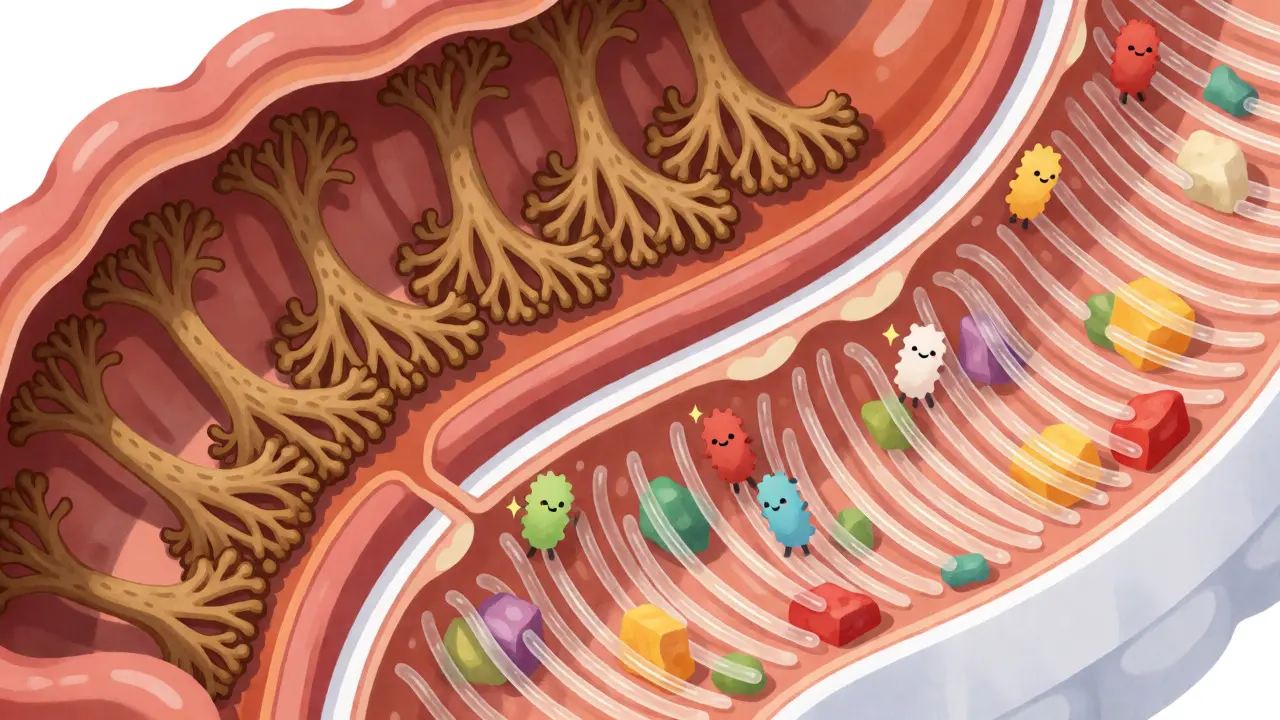
Think of soluble fiber as a gel-maker. When it hits water, it dissolves and turns thick and sticky. This isn't just texture-it's physiology. That gel slows down how fast food leaves your stomach. Slower emptying means you stay fuller longer. It also traps some of the fat and sugar you eat, meaning less gets absorbed into your bloodstream. Common sources include oats, apples, beans, and flaxseeds.
Insoluble fiber is different. It doesn’t dissolve. It stays rough and bulky as it travels through your gut. Its main job is speed. It adds bulk to stool and speeds up transit time, preventing constipation. While this keeps your digestive system happy, it doesn’t directly signal your brain to stop eating. Sources include whole wheat bran, nuts, cauliflower, and green beans.
Here’s the kicker: for weight control, soluble fiber is the heavy lifter. A review by the American Institute for Cancer Research found that increasing soluble fiber intake led to measurable reductions in waist circumference and weight. Insoluble fiber supports the process, but it doesn’t drive the hunger hormones in the same way.
How Soluble Fiber Actually Helps You Lose Weight
It’s not magic; it’s mechanics. When you eat viscous soluble fibers like beta-glucan (found in oats) or glucomannan (from konjac root), they expand in your stomach. This expansion stretches the stomach walls, sending a "stop" signal to your brain via the vagus nerve. You feel satisfied with less food.
Research backs this up. A study published in *Nutrients* in 2023 showed that participants taking psyllium husk-a powerful soluble fiber-lost significantly more weight than those on a placebo. They didn’t just eat less; their bodies processed nutrients differently. The gel formed by soluble fiber can block about 15-20% of dietary fat absorption. That’s free calories you don’t have to count.
There’s also the blood sugar angle. Spikes in insulin make your body store fat. Soluble fiber flattens these spikes. By keeping blood sugar stable, you avoid the energy crashes that lead to 3 PM cookie cravings. Dr. David Ludwig from Harvard has noted that viscous fibers impact ghrelin, the "hunger hormone," keeping levels lower for longer after meals.
The Indirect Power of Insoluble Fiber
So, should you ignore insoluble fiber? Absolutely not. Here’s why: if you’re bloated or constipated, you look and feel heavier. Water retention and trapped gas add pounds to the scale that aren’t fat. Insoluble fiber prevents this by keeping regularity sharp.
Moreover, a healthy gut environment matters. Recent studies link gut bacteria diversity to obesity risk. While soluble fiber feeds good bacteria (producing short-chain fatty acids that help burn fat), insoluble fiber helps clear out waste so bad bacteria don’t overgrow. Think of them as partners. Soluble handles the appetite; insoluble handles the plumbing.
Soluble vs. Insoluble: Which Foods Win?
Most whole foods contain both, but usually lean heavily toward one side. Knowing where to look helps you target your goals. If you’re hungry all day, double down on soluble-rich foods. If you’re sluggish in the bathroom, boost insoluble intake.
| Feature | Soluble Fiber | Insoluble Fiber |
|---|---|---|
| Primary Mechanism | Forms gel, slows digestion, increases satiety | Adds bulk, speeds up transit, cleanses gut |
| Weight Loss Impact | Direct (reduces calorie intake) | Indirect (prevents bloat/constipation) |
| Top Food Sources | Oats, barley, apples, citrus fruits, carrots, beans, peas, psyllium | Whole wheat flour, wheat bran, nuts, cauliflower, green beans, potatoes |
| Best Time to Eat | Before meals (to prime satiety) | With meals or throughout the day |
| Risk if Overconsumed | Bloating, gas (if water intake is low) | Mineral malabsorption, potential irritation |
How Much Do You Actually Need?
General guidelines suggest adults aim for 25-38 grams of total fiber daily. But for weight control, the ratio matters. Experts often recommend a 3:1 ratio of insoluble to soluble fiber for general health, but if your primary goal is appetite suppression, you might shift closer to 1:1 during active weight loss phases.
Don’t try to hit 30 grams tomorrow if you’re currently at 10. Your gut bacteria need time to adapt. Rapid increases cause gas and cramps, which makes people quit. Start by adding 5 grams per week. For example, swap white rice for brown rice, or add half an avocado to your lunch. Avocados are surprisingly high in soluble fiber.
Supplements: Worth the Hype?
Psyllium husk, glucomannan, and methylcellulose dominate the supplement aisle. Psyllium is the star here. It absorbs up to 50 times its weight in water. Studies show it can reduce body weight by 3.2% over eight weeks when combined with a calorie-controlled diet.
But here’s the catch: supplements work best as a bridge, not a destination. Whole foods provide phytonutrients and antioxidants that pills lack. Plus, chewing whole food takes time, which naturally slows down eating. If you use supplements, take them with plenty of water-at least 16 ounces. Without enough liquid, soluble fiber can turn into a concrete-like mass in your gut, causing constipation instead of relief.
Practical Strategies to Boost Fiber Intake
You don’t need a complex meal plan. Small tweaks yield big results:
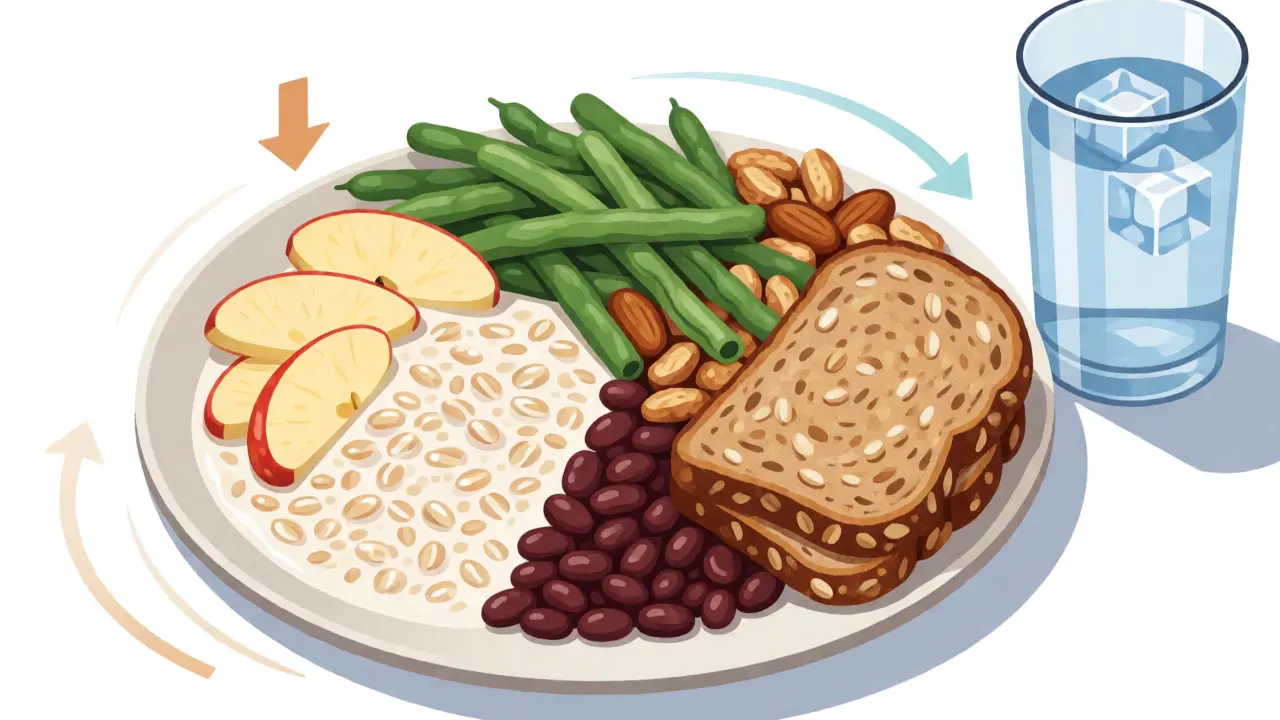
- The Pre-Meal Hack: Eat a small apple or a handful of almonds 20 minutes before dinner. The soluble fiber starts forming gel before the main meal hits, reducing overall consumption.
- Swap Your Grains: Replace white bread with rye or pumpernickel. These grains are denser in fiber and have a lower glycemic impact.
- Legume Loading: Add lentils or chickpeas to soups and salads. Half a cup of lentils has about 8 grams of fiber, mostly soluble.
- Hydrate Aggressively: Fiber needs water to work. Aim for at least 2 liters of water daily. If you increase fiber without water, you’ll feel stuffed, not slim.
Pitfalls to Avoid
One common mistake is relying solely on "high-fiber" packaged bars. Many contain added sugars or artificial sweeteners that disrupt gut bacteria. Read labels. Look for ingredients like chicory root or inulin, but watch out for excessive sugar alcohols if you have a sensitive stomach.
Another trap is ignoring individual tolerance. Some people thrive on raw vegetables (insoluble); others do better with cooked ones. Experiment. Keep a simple log of what you eat and how you feel. If you’re consistently bloated, ease off the insoluble load and focus on gentle soluble sources like oats and bananas.
Frequently Asked Questions
Can I lose weight by only eating soluble fiber?
While soluble fiber is superior for appetite control, focusing exclusively on it can lead to constipation and nutrient gaps. A balanced approach including insoluble fiber ensures digestive health, which indirectly supports weight management by preventing bloating and discomfort.
Is psyllium husk better than eating oatmeal?
Psyllium is more concentrated and effective for immediate satiety due to its high viscosity. However, oatmeal provides additional nutrients like magnesium and vitamin B1. For long-term sustainability, whole foods like oats are preferred, while psyllium can be a useful tool for specific high-calorie meals.
Why do I get gassy when I increase fiber?
Your gut bacteria ferment fiber. When you suddenly increase intake, bacteria produce excess gas as they adjust. To minimize this, increase fiber gradually (5g per week) and ensure adequate hydration. Probiotics may also help ease the transition.
Does cooking destroy fiber?
No, cooking does not destroy fiber. It may change the physical structure slightly, making some insoluble fiber easier to digest, but the total fiber content remains largely intact. In fact, cooking can sometimes make certain nutrients more bioavailable.
How much water should I drink with fiber?
Aim for at least 8-10 cups (approx. 2 liters) of water daily. When taking fiber supplements, consume at least 8-16 ounces of water with each dose. Insufficient water can cause fiber to harden in the intestines, leading to constipation rather than relief.


