
Imagine standing in a sterile clinic room, holding a tiny spoon with a drop of peanut butter. Your heart is pounding. You know this might be the moment that changes your life-or triggers a medical emergency. For millions of people living with suspected food allergies, this scenario isn't hypothetical; it's the reality of an Oral Food Challenge (OFC). This procedure is the only way to definitively confirm or rule out an allergy when skin tests and blood work give ambiguous results. But is it safe? And does it really provide the clarity you need?
The short answer is yes, but only when done right. An OFC is not just eating a nut in front of a doctor. It is a highly controlled, step-by-step medical test designed to measure exactly how much of an allergen your body can handle before reacting. While the idea sounds terrifying, data shows that severe reactions are rare when protocols are followed. Understanding what happens during these three to six hours can help reduce anxiety and prepare you for a potentially life-changing diagnosis.
Why Skin Tests Aren't Enough
You’ve probably had a skin prick test where a nurse pokes your arm with a needle dipped in peanut extract. If a bump appears, it’s positive. Simple, right? Not quite. According to the National Institutes of Health, clinical history and lab tests alone have diagnostic accuracy rates below 50% for many common foods. A positive skin test means your immune system *recognizes* the protein, but it doesn’t necessarily mean you’ll get sick if you eat it.
This gap is why the American Academy of Allergy, Asthma & Immunology (AAAAI) and the European Academy of Allergy and Clinical Immunology (EAACI) both designate the OFC as the gold standard. It moves beyond guessing based on markers in your blood or skin. Instead, it observes your actual physiological response. If you eat the food and nothing happens, you don’t have an allergy. If you react, you do. It’s black and white, which is incredibly valuable for patients who have been avoiding entire food groups unnecessarily.
How the Procedure Works Step-by-Step
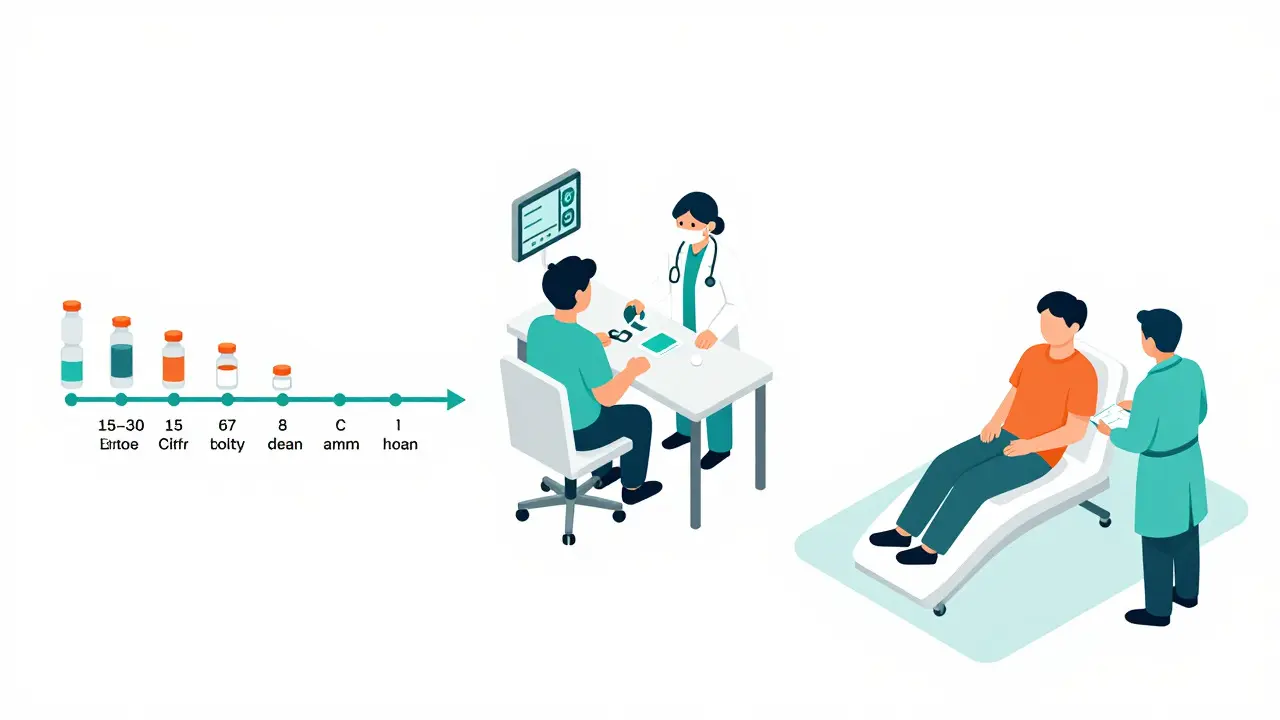
An OFC is a marathon, not a sprint. The entire process typically takes between three and six hours. Here is what you can expect from start to finish:
- Preparation: Before the day of the test, you will likely be asked to stop taking antihistamines five to seven days prior. These medications can mask mild symptoms like hives, making it harder for doctors to see a reaction. You should also arrive well-rested and free of any respiratory infections.
- Baseline Check: When you arrive, a clinician checks your vital signs. They ensure you are healthy enough to undergo the stress of the test.
- Dose Escalation: The real test begins with a microscopic amount of the allergen-often just 1 to 2 milligrams. This is roughly 1/1000th of a normal serving. If you tolerate that dose, the next one comes 15 to 30 minutes later. Each subsequent dose is larger than the last. You might go through eight to ten doses in total.
- Observation Period: After the final dose, you don’t leave immediately. You stay for another two to three hours while staff monitor you for delayed reactions. This is crucial because some symptoms take time to appear.
Throughout this time, at least two healthcare professionals-a physician and a nurse-are present. They watch for subtle signs: flushing, itching, sneezing, or changes in breathing. The setting must be equipped with emergency supplies, including epinephrine, antihistamines, and oxygen, ready to deploy if things go wrong.
Safety Profile: How Risky Is It Really?
Fear is the biggest barrier for most patients. "What if I go into shock?" is the most common question. The good news is that modern protocols have made OFCs remarkably safe. A 2020 study published in the Journal of Allergy and Clinical Immunology found that only 0.9% of challenges resulted in a reaction requiring treatment. Severe reactions involving anaphylaxis occur in just 1% to 2% of cases when proper supervision is in place.
Most reactions, when they happen, are mild. Think hives, slight swelling, or stomach cramps. Dr. Laura Capucilli, an allergist at Rochester Regional Health, notes that severe reactions are uncommon and usually manageable right there in the office. The key to safety is the environment. The AAAAI mandates that OFCs be performed only by experienced clinicians in settings fully equipped to manage anaphylaxis. This isn’t a casual check-up; it’s a monitored medical event.
| Method | Positive Predictive Value | Time Required | Risk of False Positives |
|---|---|---|---|
| Skin Prick Test | 50-60% | 15-30 minutes | High |
| Serum-specific IgE Blood Test | 33-100% (varies widely) | Lab visit + wait for results | Moderate to High |
| Oral Food Challenge (OFC) | Near 100% | 3-6 hours | Very Low |
Who Should Undergo an Oral Food Challenge?
Not everyone needs an OFC. In fact, it’s not used for screening large populations because it’s resource-intensive. It shines in specific scenarios:
- Ambiguous History: You reacted once years ago, but you’re not sure if it was truly allergic or something else like a stomach bug or exercise intolerance.
- Outgrowing Allergies: Many children outgrow milk, egg, and soy allergies by age five. An OFC confirms this, allowing them to reintroduce those foods safely.
- Conflicting Test Results: Your blood test says you’re allergic, but your skin test says you aren’t. The OFC settles the dispute.
However, if you have a clear, recent history of a severe reaction to a specific food, doctors usually skip the OFC. Why risk a reaction when the evidence is already strong? In those cases, avoidance is the safer route.
The Human Side: Anxiety and Relief
Let’s talk about the emotional weight of an OFC. Surveys show that 78% of parents report moderate to high anxiety before their child’s challenge. It’s scary to watch someone you love ingest a potential trigger. Children often cry, not just from fear, but from the taste of repeated doses of the same food.
But the relief is profound. One parent on a support forum shared, "The oral food challenge was terrifying but necessary. My son cried through the entire peanut challenge, but testing confirmed he'd outgrown it - life-changing result." That sense of freedom-being able to buy regular ice cream without checking labels-is worth the temporary stress. Post-procedure satisfaction rates are high, with 89% of caregivers at Nationwide Children's Hospital reporting they were glad they did it.
To make the experience smoother, experts recommend bringing distractions for kids, wearing loose clothing, and ensuring everyone is well-rested. Knowing what to expect helps demystify the process.

Future Directions and Current Standards
While the OFC remains the gold standard, science is working to make it even better. The NIH has funded studies to refine dosing protocols for high-risk foods like tree nuts, aiming to lower reaction rates further. There is also growing interest in home-based OFCs for low-risk cases, though this requires strict clinician oversight.
For now, no alternative test matches the OFC’s accuracy. Component-resolved diagnostics, which look at specific proteins in a food, are helpful but still fall short of the definitive proof an OFC provides. As food allergy prevalence continues to rise-up 50% among children since the late 1990s-the demand for accurate diagnosis is increasing. This means more clinics are training staff in OFC protocols, and organizations like the Food Allergy Research & Education (FARE) are updating patient guides to keep information current.
Frequently Asked Questions
How long does an oral food challenge take?
A standard OFC typically lasts between three and six hours. This includes the time for administering multiple doses of the allergen over one to two hours, plus a mandatory observation period of two to three hours after the final dose to catch any delayed reactions.
Is an oral food challenge dangerous?
When performed by trained specialists in a properly equipped facility, the risk is very low. Only about 1% to 2% of challenges result in severe reactions requiring epinephrine. Most reactions are mild, such as hives or itching, and are easily managed in the clinic.
Do I need to fast before the test?
Usually, no. Unless your doctor specifies otherwise, you can eat a light meal beforehand. However, you must avoid the specific food being tested for several weeks prior to the appointment. You may also need to stop taking antihistamines a few days before the test.
Can children undergo an oral food challenge?
Yes, and it is very common in pediatric allergy care. Children often outgrow allergies to milk, egg, and soy. An OFC is the best way to confirm if they can safely reintroduce these foods. Clinicians use extra patience and distraction techniques to help young patients through the process.
What happens if I react during the challenge?
If you develop symptoms, the test stops immediately. The doctor will treat your reaction using available medications like antihistamines or epinephrine. Once you are stable, you will rest and recover. The result will be recorded as a positive challenge, confirming the allergy.


