
Antibiotic & Antacid Timing Calculator
Your Medication Schedule
Enter the times you plan to take your medications today.
Ready to Check
Select your medication and enter times to see if they are safely spaced apart.
Imagine taking a powerful prescription to fight an infection, only to have it neutralized before it ever reaches your bloodstream. It sounds like a plot twist in a medical drama, but for millions of people, this is a real risk when they mix over-the-counter antacids with their prescribed antibiotics. You reach for a Tums or Maalox to soothe heartburn, swallow your antibiotic pill, and think you're covered. In reality, you might be flushing most of that medicine down the drain. This isn't just about feeling slightly less effective; it's about treatment failure, persistent infections, and the growing crisis of antibiotic resistance.
The Chemistry Behind the Clash
To understand why these two common medications don't play nice together, we have to look at what happens inside your stomach. The core issue is a chemical process called chelation. Many popular antacids contain metal ions-specifically aluminum, magnesium, and calcium. When these metals meet certain types of antibiotics in your digestive tract, they bind together tightly. Think of it like a magnet snapping onto steel. They form an insoluble complex, a clump that your body simply cannot absorb.
Instead of entering your bloodstream to hunt down bacteria, the antibiotic stays stuck in your gut and passes through your system unused. Research published in F1000Research (2022) highlights that this pharmacokinetic interaction can reduce the bioavailability of specific drugs by anywhere from 40% to 90%. That means if you take them at the same time, you might only get a fraction of the dose your doctor prescribed. The U.S. National Library of Medicine’s StatPearls (updated July 2023) identifies this as a critical concern because it turns a potent cure into a placebo-like substance.
Which Medications Are the Culprits?
Not every antibiotic suffers from this fate. Penicillin derivatives like amoxicillin are relatively resilient, though some studies show a modest 18-22% drop in absorption when mixed with aluminum-magnesium hydroxide antacids. However, two major classes of antibiotics are highly vulnerable: tetracyclines and fluoroquinolones.
- Tetracyclines: Drugs like tetracycline itself can see a 70-90% reduction in absorption when taken with aluminum-containing antacids. Doxycycline, a common variant, sees a 30-50% drop.
- Fluoroquinolones: These include heavy hitters like ciprofloxacin and levofloxacin. Ciprofloxacin absorption can plummet from 70% bioavailability down to just 15-25% if paired with aluminum antacids. Levofloxacin drops by 25-40%.
If you are on one of these medications, the stakes are higher. A case study from University Hospitals (March 2024) described a patient with recurrent urinary tract infections who failed multiple rounds of ciprofloxacin. The culprit? Daily use of Tums (calcium carbonate). Once the timing was corrected, the infection cleared up. This isn't an isolated incident. Community health forums document dozens of similar stories where patients struggled with recurring infections until they realized their heartburn relief was sabotaging their cure.
Antacids vs. Other Acid Reducers
You might wonder if switching to a different type of acid reducer solves the problem. There are three main categories of drugs used for heartburn and acid reflux, and they interact with antibiotics differently.
| Medication Type | Key Ingredients | Onset of Action | Interaction Risk with Antibiotics |
|---|---|---|---|
| Antacids | Aluminum, Magnesium, Calcium | 1-5 minutes | High (Chelation) |
| H2 Blockers | Famotidine, Ranitidine | 30-60 minutes | Low (pH change only) |
| Proton Pump Inhibitors (PPIs) | Omeprazole, Pantoprazole | 1-4 hours | Low (pH change only) |
Antacids provide immediate relief because they neutralize existing acid. But that speed comes at a cost. H2 blockers and PPIs work by reducing acid production rather than neutralizing it directly. Because they lack the metal ions that cause chelation, they generally pose fewer direct absorption risks. However, they do alter stomach pH, which can still affect how some drugs dissolve. The trade-off is time: antacids work instantly, while PPIs can take days to reach full effect. For someone needing quick relief during a course of antibiotics, this creates a difficult choice.
The Hidden Cost of Treatment Failure
Why does this matter beyond just feeling sick longer? The American Pharmacists Association identified antacid-antibiotic interactions as the #3 most common OTC-prescription drug interaction in their 2023 report. When antibiotics fail due to poor absorption, bacteria survive. Surviving bacteria can multiply and become resistant to the drug. This contributes to the broader public health crisis of antibiotic resistance, which the CDC notes causes over 35,000 deaths annually in the U.S.
Dr. John Dumot, a digestive health specialist at University Hospitals, warned in March 2024 that frequent misuse leads to subtherapeutic levels, potentially causing therapy failures. A 2023 meta-analysis showed a 37% higher treatment failure rate for infections when antibiotics were improperly co-administered with antacids compared to properly timed administration. It’s not just an inconvenience; it’s a safety hazard.
How to Time Your Doses Correctly
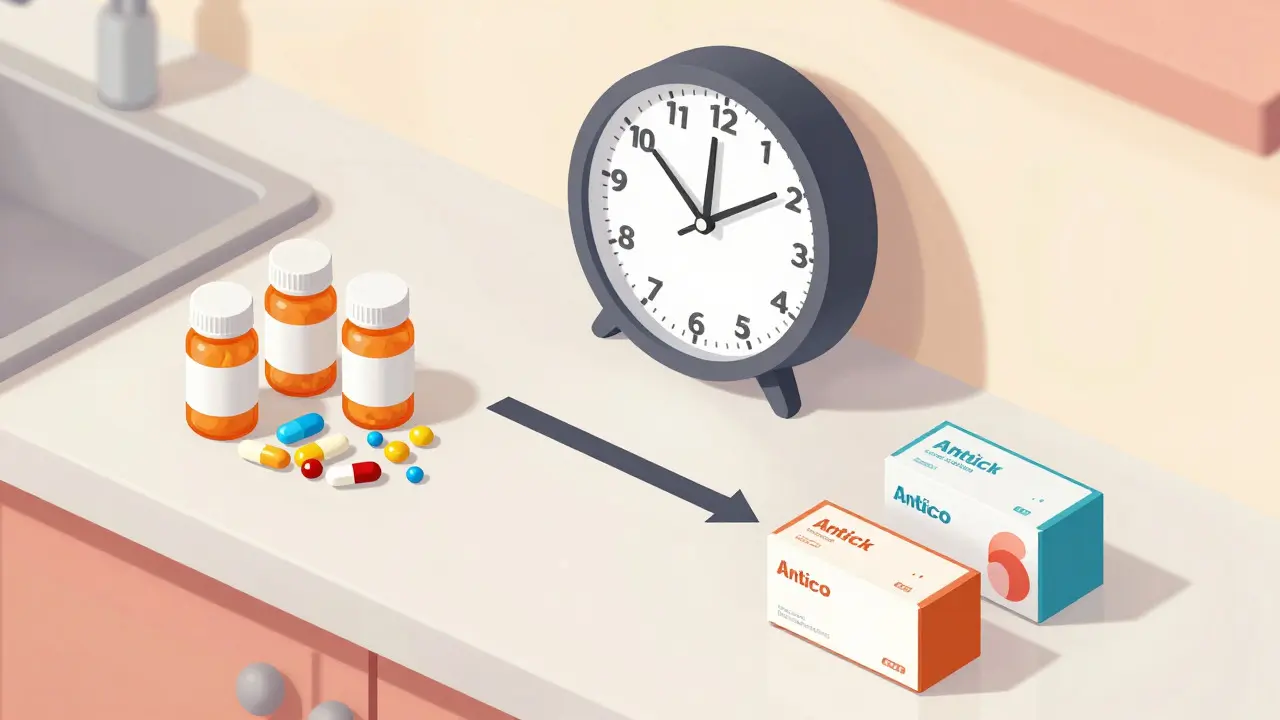
The good news is that you don't usually have to choose between treating your infection and soothing your heartburn. You just need to space them out. The goal is to let the antibiotic pass through the stomach and enter the small intestine (where most absorption happens) before the antacid arrives to interfere.
- For Tetracyclines: Take your antibiotic at least 2 hours before or 4-6 hours after your antacid.
- For Fluoroquinolones (like Ciprofloxacin): Be even more cautious. Separate them by at least 4 hours. Some guidelines suggest taking the antibiotic 2 hours before or 6 hours after the antacid.
- For Amoxicillin: While less sensitive, a 2-hour gap is still a safe bet to ensure maximum efficacy.
Set alarms on your phone if you have to. Consistency is key. If you are taking an antibiotic twice a day and need antacid relief frequently, map out your schedule the night before. If the timing feels impossible, talk to your pharmacist. They might recommend switching to a non-interacting acid reducer like famotidine for the duration of your antibiotic course.

Who Is Most at Risk?
This interaction affects everyone, but some groups are more vulnerable. Elderly patients often manage multiple medications and may not realize that their daily calcium supplement or heartburn tablet is interfering with their new prescription. A 2022 consumer survey revealed that only 32% of OTC antacid users knew about potential antibiotic interactions, despite warnings being printed on packaging since FDA-mandated labeling changes in 2019.
Pharmacists play a crucial role here. As noted in StatPearls, retail pharmacists encounter patients daily and should counsel them on these pitfalls. Don't hesitate to ask: "Will my heartburn medicine affect my antibiotic?" It’s a simple question that could save you weeks of illness.
Practical Tips for Managing Both Conditions
If you find yourself needing both types of medication, consider these strategies:
- Read the Label: Check the active ingredients in your antacid. If it lists aluminum, magnesium, or calcium, assume it will interact.
- Use Non-Metal Alternatives: Ask your doctor if a short-term H2 blocker is appropriate for your symptoms while you finish your antibiotics.
- Monitor Symptoms: If your infection symptoms don’t improve after 2-3 days of antibiotics, contact your doctor. Mention any antacid use immediately.
- Educate Household Members: If you’re caring for children or elderly relatives, remind them of the timing rules. Kids often get liquid antibiotics and chewable antacids, making timing errors easy.
The market for OTC antacids is huge-worth $2.8 billion in 2023 alone-with 15 million Americans using them weekly. Meanwhile, doctors prescribe over 250 million courses of antibiotics annually in the U.S. The overlap is inevitable. By understanding the chemistry and respecting the clock, you can keep your heartburn quiet and your infection gone.
Can I take Tums with my antibiotics?
You can, but you must separate the doses. Tums contain calcium carbonate, which binds to many antibiotics. Wait at least 2 to 4 hours after taking your antibiotic before taking Tums, or take Tums 2 hours before your antibiotic. Check your specific medication guide for exact timing.
Do all antacids interact with antibiotics?
Most traditional antacids containing aluminum, magnesium, or calcium do interact with certain antibiotics like tetracyclines and fluoroquinolones. However, H2 blockers (like famotidine) and Proton Pump Inhibitors (like omeprazole) do not contain these metals and generally have lower interaction risks, though they can still affect absorption via pH changes.
What happens if I take an antacid and antibiotic at the same time?
The metal ions in the antacid can bind to the antibiotic molecules in your stomach, forming a complex that your body cannot absorb. This can reduce the amount of antibiotic entering your bloodstream by 40-90%, leading to lower drug levels, potential treatment failure, and increased risk of antibiotic resistance.
Is it safe to take antacids with amoxicillin?
Amoxicillin is less affected by antacids than other antibiotics, but studies show a possible 18-22% reduction in absorption when taken with aluminum-magnesium antacids. To ensure maximum effectiveness, it is still recommended to separate the doses by at least 2 hours.
How long should I wait between taking an antacid and a fluoroquinolone?
Fluoroquinolones like ciprofloxacin and levofloxacin are highly sensitive to antacids. Guidelines recommend waiting at least 4 hours after taking the antibiotic before consuming an antacid, or taking the antibiotic 2 hours before the antacid. Some sources suggest a 6-hour window for optimal safety.
Are there any antacids that do not interact with antibiotics?
Traditional antacids almost always contain interacting metals. However, you can ask your doctor about using H2 blockers (e.g., famotidine) or PPIs (e.g., omeprazole) instead, as they reduce acid without using metal ions that chelate antibiotics. Always consult your healthcare provider before switching medications.


