
Imagine taking a blood pressure medication that suddenly stops working because of an over-the-counter painkiller you grabbed for a headache. This isn't a mystery; it's a classic example of a pharmacodynamic drug interaction, which occurs when one drug modifies the effect of another at the site of action without changing how much drug is in your system. Unlike pharmacokinetic interactions that mess with absorption or metabolism, these happen directly where the drugs do their work-usually at specific receptors in your body. For many patients on multiple medications, understanding this mechanism is the difference between effective treatment and unexpected side effects.
These interactions account for roughly 40% of all clinically significant drug-drug issues seen in hospitals. They can be dangerous, like when two drugs fight for the same receptor, or beneficial, like when two antibiotics team up to kill bacteria more effectively than either could alone. Knowing how they work helps you and your healthcare provider make smarter choices about what to take together.
How Pharmacodynamic Interactions Actually Work
At the core of these interactions is the concept of receptor binding. Drugs don't just float around randomly; they target specific proteins called receptors. The strength of this connection is measured by affinity, while the maximum effect a drug can produce is its efficacy. When two drugs target the same receptor, things get interesting. One might block the other (antagonism), or they might amplify each other's effect (synergism).
There are three main ways these interactions play out:
- Additive: The combined effect equals the sum of the individual effects. If Drug A does 5 units of work and Drug B does 5, together they do 10.
- Synergistic: The combined effect is greater than the sum. Two drugs working together create a result stronger than expected, often allowing for lower doses of each.
- Antagonistic: One drug reduces or blocks the effect of the other. This is common when drugs compete for the same biological pathway.
For instance, beta-blockers like propranolol and beta-agonists like albuterol compete for beta-adrenergic receptors. Propranolol blocks the receptors, potentially negating albuterol's ability to open up airways in asthma patients. This isn't just theoretical; it's a critical consideration for anyone managing both heart conditions and respiratory issues.
Common Types and Real-World Examples
Not all pharmacodynamic interactions look the same. Some involve direct competition at the molecular level, while others disrupt broader physiological systems. Here are some of the most frequently encountered scenarios:
| Type | Mechanism | Classic Example | Clinical Risk |
|---|---|---|---|
| Receptor Competition | Drugs bind to the same receptor sites | Beta-blockers vs. Beta-agonists | Reduced therapeutic effect or blocked rescue medication |
| Physiological Antagonism | Drugs oppose each other's systemic effects | NSAIDs vs. ACE Inhibitors | Increased blood pressure, reduced kidney function |
| Synergistic Toxicity | Combined effects exceed safe limits | Opioids + Benzodiazepines | Respiratory depression, sedation, overdose risk |
| Therapeutic Synergy | Combined effects enhance desired outcome | Trimethoprim + Sulfamethoxazole | Lower required doses, better infection control |
A particularly sneaky interaction involves non-steroidal anti-inflammatory drugs (NSAIDs) like ibuprofen and antihypertensives. NSAIDs inhibit the production of prostaglandins in the kidneys, which normally help maintain blood flow. When you combine them with ACE inhibitors, renal blood flow can drop by about 25%, reducing the blood pressure medication's effectiveness and straining the kidneys. This is why doctors often advise caution when mixing daily painkillers with long-term blood pressure meds.
Another high-risk combination is serotonergic drugs. Mixing selective serotonin reuptake inhibitors (SSRIs) with monoamine oxidase inhibitors (MAOIs) or certain antidepressants can lead to serotonin syndrome. This condition occurs when serotonin levels spike too high, causing symptoms ranging from agitation to life-threatening fever and muscle rigidity. Recent meta-analyses suggest the risk increases significantly-up to 24-fold-with specific polypharmacy regimens.
Risks Associated with Polypharmacy and Narrow Therapeutic Indices
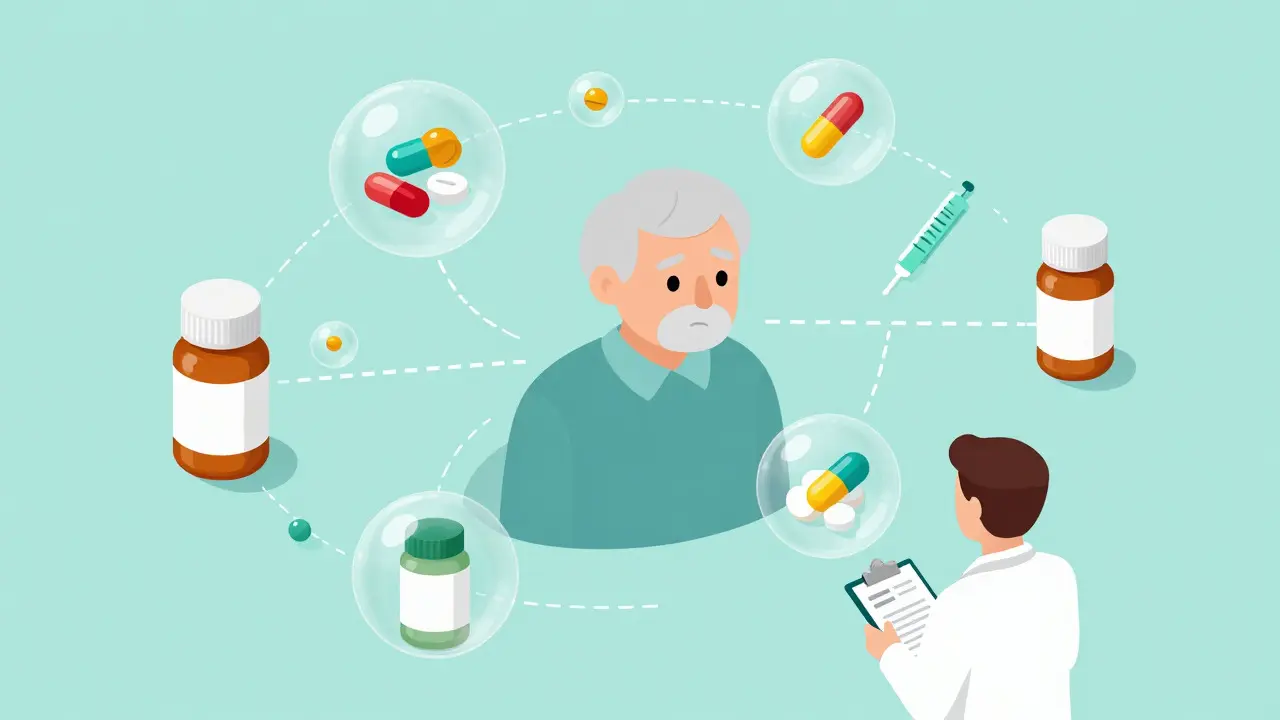
The danger of pharmacodynamic interactions spikes when dealing with drugs that have a narrow therapeutic index. These are medications where the dose that works is very close to the dose that causes toxicity. Think of warfarin, digoxin, or lithium. Small changes in their effects can tip the balance from helpful to harmful.
Data from FDA adverse event reports shows that 68% of serious adverse events involving pharmacodynamic interactions resulted in hospitalization, compared to 42% for pharmacokinetic ones. This highlights why these interactions are often more acute and immediate in their consequences. In elderly populations, who typically take an average of 4.8 prescription medications simultaneously, the complexity multiplies. A 2022 survey of practicing physicians found that 63% encounter at least one potentially dangerous pharmacodynamic interaction every month, most commonly involving anticoagulants paired with antiplatelet agents or multiple central nervous system depressants.
The human element plays a huge role here. Misunderstanding how a new medication interacts with existing ones is a leading cause of preventable hospital admissions. For example, adding a new antibiotic that affects gut flora or altering gastric pH can indirectly influence the absorption or effect of other drugs, creating a cascade of unintended pharmacodynamic shifts.

Managing Interactions: From Prescribing to Monitoring
So, how do we stay safe? It starts with awareness. Healthcare providers use clinical decision support systems (CDS) to flag potential interactions. While these tools have reduced errors by about 37% in recent studies, they aren't perfect. They still miss roughly 22% of significant interactions because algorithms can be oversimplified. That’s why human expertise remains crucial.
Pharmacist-led medication reviews have proven highly effective, reducing adverse events in elderly patients by 58%. These reviews focus on identifying redundant therapies, adjusting doses, and spotting contraindications before they become problems. If you’re on multiple medications, asking your pharmacist for a comprehensive review is one of the best steps you can take.
Patients also have a role to play. Keep an accurate list of all medications, including supplements and over-the-counter drugs. Mention any new prescriptions to your doctor and ask specifically about pharmacodynamic interactions. Don’t assume that if two drugs are prescribed by different specialists, they automatically work well together. Communication between providers is key, but patient advocacy fills the gaps.
Future Directions and Technological Advances
The field is evolving rapidly. Regulatory bodies like the FDA now require specific pharmacodynamic interaction studies for new drugs targeting the central nervous system. The global market for drug interaction software is growing, projected to reach billions in value by 2030, driven by aging populations and increasing polypharmacy.
Researchers are developing machine learning algorithms to predict interaction risks more accurately. One notable study achieved 89% accuracy in predicting serotonin syndrome risk from complex medication regimens. Future systems will likely integrate real-time data from electronic health records, providing instant alerts to clinicians as they prescribe. This shift moves us from reactive identification to proactive prevention, tailoring therapy to individual patient profiles.
As the global population aged 65 and older grows, the importance of mastering pharmacodynamic interactions will only increase. Understanding these mechanisms isn't just academic; it's a vital skill for safer, more effective healthcare delivery.
What is the main difference between pharmacodynamic and pharmacokinetic interactions?
Pharmacokinetic interactions affect how much drug reaches the site of action (absorption, distribution, metabolism, excretion). Pharmacodynamic interactions occur at the site of action itself, where one drug changes the effect of another without altering its concentration.
Are all pharmacodynamic interactions dangerous?
No. Some are therapeutically beneficial, such as synergistic antibiotic combinations that allow for lower doses. However, antagonistic or additive toxic interactions can be severe and require careful management.
Which drugs are most prone to pharmacodynamic interactions?
Drugs with a narrow therapeutic index (like warfarin, digoxin, lithium) and those affecting major physiological systems (blood pressure, coagulation, CNS function) are highest risk. Polypharmacy in elderly patients significantly increases exposure to these risks.
How can patients reduce the risk of these interactions?
Maintain an up-to-date medication list, consult pharmacists or doctors before starting new meds (including OTCs), and request regular medication reviews. Be aware of symptoms that may signal an interaction, such as sudden changes in blood pressure or unusual sedation.
Do herbal supplements count in pharmacodynamic interactions?
Yes. Many herbal supplements contain active compounds that can interact pharmacodynamically with prescription drugs. Always disclose supplement use to your healthcare provider to ensure a complete picture of your medication regimen.


Comments
Fabian Saldana August 25, 2026 AT 15:32
Great breakdown of a complex topic! Understanding these mechanisms is truly empowering for patients. Let's keep spreading the word about safe medication practices.
Alex Brown August 27, 2026 AT 01:16
The distinction between pharmacokinetic and pharmacodynamic interactions is fundamental to understanding therapeutic efficacy. It highlights the intricate dance of molecular biology where location and binding affinity dictate clinical outcomes. One must appreciate the elegance, and danger, of such specific receptor interactions.
Kaylyn Mello August 27, 2026 AT 20:58
i totally agree with the point about keeping a list of meds. my mom used to forget her supplements all the time until we started using an app. it makes such a difference when you actually know what you are taking
joyce Hogewoning August 29, 2026 AT 14:04
omg this made me so nervous because i take ibuprofen like twice a day for my migraines and i am on lisinopril for blood pressure and nobody ever told me about the kidney thing!! i feel like they just throw pills at us without explaining how they interact with each other its so scary thinking about it now but also kind of interesting that there is actual science behind why my head hurts less sometimes but then my bp goes up weirdly anyway who else has had this experience??
Thhomas Fox August 29, 2026 AT 14:25
Nice summary. The beta-blocker/agonist conflict is a classic trap in emergency medicine. Always double-check the chart before pushing albuterol on a patient with a rate-control issue.
Owen John August 30, 2026 AT 21:11
They say 68% lead to hospitalisation, sure, but I bet the real number is higher if you account for the ones where the patient just 'feels off' and doesn't go to the doctor. The pharma industry loves to hide the long tail of side effects. It's not just about the big obvious ones, it's about the slow erosion of your health while they count their profits. Typical corporate negligence disguised as medical progress.
Maneesh kv September 1, 2026 AT 04:13
Good post 👍 but i think we need to talk more about cost. in india many patients cant afford the brand name drugs so they use generics which might have different excipients that affect absorption. this adds another layer to the interaction problem. 🤔
John Park September 2, 2026 AT 04:47
Let's be real, most doctors are too busy to care about the fine print of drug interactions. They just write the script and hope for the best. The system is broken and blaming the patient for 'keeping a list' is lazy. It's the provider's job to manage the chaos they create.
Kathleen McGrath September 3, 2026 AT 15:59
This is really helpful info. I always wondered why some meds don't work well together. Thanks for making it easy to understand!
Lemuel Gomez September 5, 2026 AT 02:30
It is, indeed, fascinating; however, one must consider the role of genetic polymorphisms in enzyme activity, which, while primarily pharmacokinetic, can indirectly influence the threshold for pharmacodynamic toxicity in narrow therapeutic index agents...
Emmanuel Umana September 6, 2026 AT 14:46
In Nigeria, we often see traditional herbs mixed with modern meds. This is a huge area for study. We need more local data on these specific interactions.
Lilian Binda September 7, 2026 AT 05:50
stop acting like western medicine is the only way. our ancestors knew about plant interactions for thousands of years before these lab coats showed up. its just that they didnt call it pharmacodynamics. dont let them tell you its new science