
Opioid Respiratory Risk Assessor
Select the factors that apply to the current situation.
Concomitant Medications
Are any of these being taken alongside the opioid?
Select your profile details and click "Assess Risk Level" to see your risk multiplier and safety recommendations.
You know that feeling when you take a strong painkiller and just want to sleep? That drowsiness is normal. But there is a thin line between resting and your brain simply forgetting to tell your lungs to breathe. This condition, known as opioid-induced respiratory depression (OIRD), is not just "sleeping it off." It is a life-threatening emergency where the central nervous system slows down so much that breathing becomes shallow, irregular, or stops entirely.
Every year, approximately 20,000 patients in the United States require emergency rescue medication after surgery because their breathing slowed dangerously due to opioids. For those managing chronic pain at home, the risk is equally real but often less monitored. Understanding the specific signs of this reaction can mean the difference between a quick recovery and permanent brain damage or death.
The Physiology: Why Opioids Stop Breathing
To understand why this happens, you have to look at how opioids work in the brain. These medications bind to mu-opioid receptors in the brainstem, the part of your brain responsible for automatic functions like heart rate and breathing. When these receptors are overstimulated, the brain’s drive to breathe weakens.
Normally, if your carbon dioxide levels rise, your brain screams at your diaphragm to breathe faster. With opioids, that alarm system gets muted. You might build up high levels of carbon dioxide (hypercapnia) without feeling the urge to gasp for air. This is dangerous because you can look asleep while your oxygen levels quietly drop. According to clinical data, severe cases involve a respiratory rate below 8 breaths per minute and oxygen saturation dropping below 85%. The scariest part? If a patient is on supplemental oxygen, their oxygen levels might look fine on a monitor while they are still suffocating internally due to carbon dioxide buildup.
Critical Signs to Watch For
Recognizing the early warning signs is the most critical skill for preventing tragedy. The Cleveland Clinic identifies a specific cluster of symptoms that appear before breathing completely stops. You need to watch for these changes in behavior and physical state:
- Slow Breathing: This is present in 100% of confirmed OIRD cases. Count the breaths. If it is fewer than 8-10 per minute, act immediately.
- Lethargy and Confusion: About 78% of patients report extreme tiredness, and 53% experience disorientation. If someone is hard to wake up or doesn't make sense when they talk, check their breathing.
- Nausea and Vomiting: Reported in 65% of cases, this can be an early sign of toxicity.
- Pinpoint Pupils: While not always reliable with all drugs, constricted pupils are a classic sign of opioid effect.
- Tachycardia: A fast heart rate occurs in 37% of cases as the body struggles to compensate for low oxygen.
If you see slow, shallow, or irregular breathing combined with difficulty waking the person, do not wait. Call emergency services immediately.
Who Is at Highest Risk?
Not everyone reacts to opioids the same way. Research published in the Canadian Journal of Pain highlights specific factors that multiply the danger. Knowing your risk profile helps you advocate for better monitoring.
| Risk Factor | Risk Multiplier | Why It Matters |
|---|---|---|
| Opioid Naïvety | 4.5x Higher | Patients who haven't taken opioids recently lack tolerance, making standard doses potentially toxic. |
| Concurrent Benzodiazepines | 6.3x Higher | Mixing opioids with sedatives like Xanax or Valium depresses the CNS twice over. |
| Advanced Age (>60) | 3.2x Higher | Aging bodies metabolize drugs slower, leading to higher concentrations in the blood. |
| Female Sex | 1.7x Higher | Hormonal and metabolic differences can affect drug processing and sensitivity. |
| Polypharmacy | 14.7x Higher | Combining opioids with alcohol or other sedatives creates a synergistic depressive effect. |
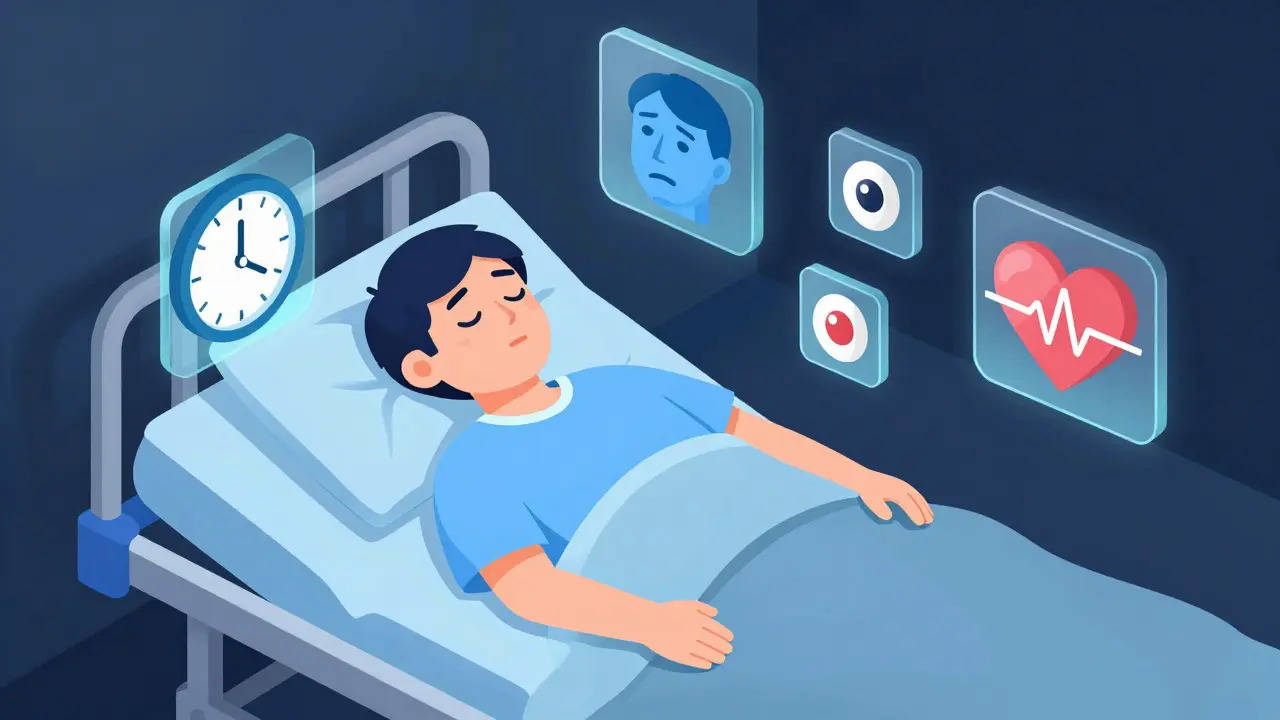
Dr. Nikolaus Gravenstein from the University of Florida points out a terrifying gap in care: if vital signs are checked only every four hours, patients are unmonitored 96% of the time. Most respiratory events happen in those gaps. If you fall into any of these high-risk categories, you need continuous monitoring, not periodic checks.
The Role of Monitoring Technology
In hospitals, technology plays a huge role in catching OIRD before it becomes fatal. However, not all monitors are created equal. Pulse oximetry, which clips onto your finger to measure oxygen, is the standard tool. It has an 89% sensitivity for detecting respiratory depression in patients not receiving extra oxygen. But here is the catch: if you are getting supplemental oxygen through a nasal cannula, pulse oximetry can give false reassurance. Your oxygen levels stay high even as your breathing slows and carbon dioxide builds up.
This is where capnography comes in. Capnography measures the carbon dioxide you exhale. Studies show it has a 94% sensitivity for detecting issues when supplemental oxygen is used. Leading protocols now recommend continuous capnography for high-risk patients, with alarms set to trigger if end-tidal CO2 exceeds 50 mmHg or breathing drops below 10 times a minute. Despite this, only 22% of U.S. hospitals have fully implemented these comprehensive prevention protocols, leaving many patients vulnerable.
Treatment: Naloxone and Beyond
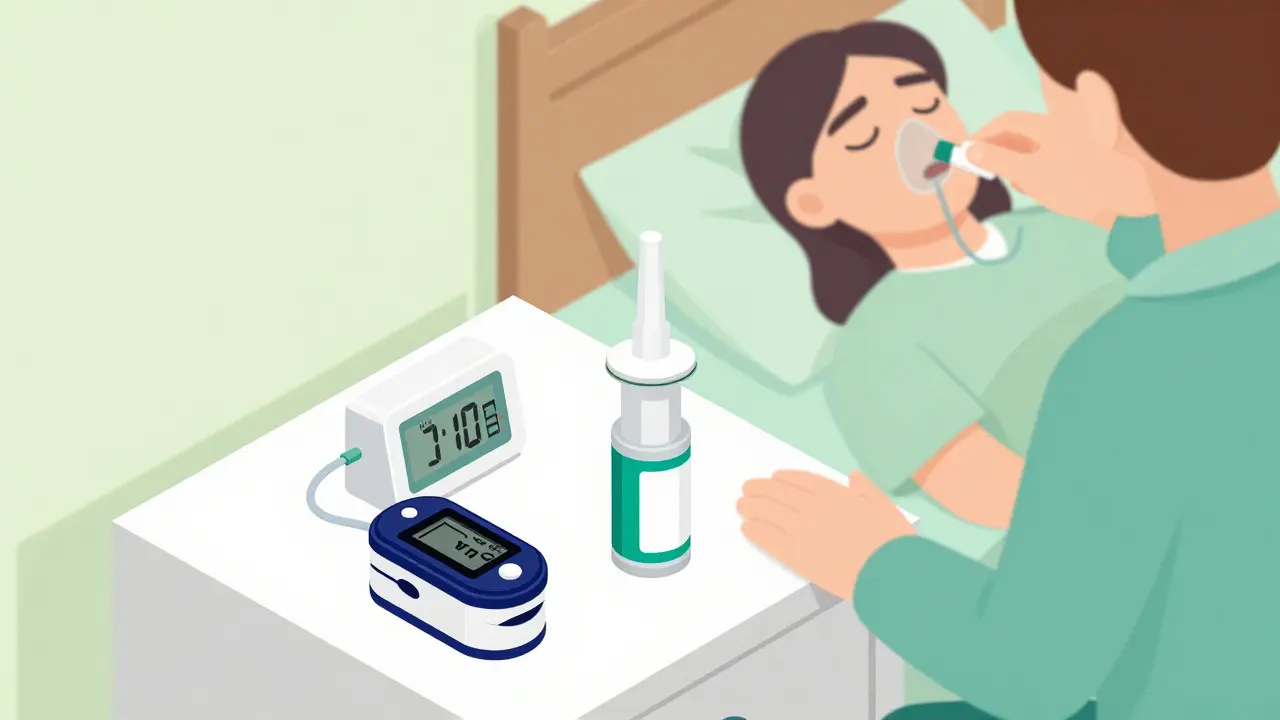
If respiratory depression sets in, the immediate treatment is Naloxone, also known by brand names like Narcan. This medication acts as an antagonist, kicking the opioid molecules off the receptors in the brain and restoring the drive to breathe. It works within minutes.
However, giving naloxone isn't as simple as spraying it and walking away. In hospital settings, doctors must titrate the dose carefully. Giving too much at once can precipitate acute withdrawal, causing severe pain, vomiting, and stress on the heart, which is particularly risky for cancer patients or those with cardiac issues. The goal is to restore breathing without removing all pain relief. After administration, close observation is required because naloxone wears off faster than many long-acting opioids, meaning the respiratory depression can return-a phenomenon called re-narcotization.
Prevention Strategies for Patients and Caregivers
Prevention is far more effective than reversal. Here are practical steps to reduce risk, based on guidelines from the Anesthesia Patient Safety Foundation and the American Pain Society:
- Avoid Mixing Sedatives: Never combine opioids with alcohol, benzodiazepines, or sleep aids unless explicitly directed and monitored by a doctor. This combination increases risk by nearly 15-fold.
- Start Low, Go Slow: For opioid-naïve patients, fixed-schedule dosing is dangerous. Dosing should be individualized based on pain levels and side effects.
- Use the "Respiratory Safety Window": Newer guidelines suggest individualized dosing intervals. Don't take the next dose until the previous one has worn off sufficiently to maintain safe breathing.
- Monitor Continuously: If you are caring for someone at home, especially a child or elderly parent, check their breathing regularly. Count breaths for a full minute. Set a timer if needed.
- Have Naloxone Ready: If prescribed opioids, ask your doctor for a naloxone kit. Keep it accessible, not locked away. Teach family members how to use it.
Hospitals that implemented pharmacist-led dosing protocols and mandatory staff training saw a 47% reduction in OIRD incidents. You can push for similar rigor in your care plan by asking your provider about their risk assessment protocol.
The Future of Opioid Safety
The medical community is taking OIRD seriously. The Agency for Healthcare Research and Quality lists it as a top preventable adverse event, costing the healthcare system $1.2 billion annually. In response, new technologies are emerging. Smart monitoring systems from companies like Masimo and Philips now integrate predictive analytics, claiming to predict respiratory depression 15 minutes before symptoms appear.
Additionally, researchers are developing biased mu-opioid receptor agonists-new types of opioids that provide pain relief without depressing breathing. These are currently in Phase III trials. Until then, awareness remains our best defense. The NIH has allocated $37.5 million for research in fiscal year 2024 to find genetic markers for susceptibility, aiming to personalize opioid therapy further.
What is the first sign of respiratory depression from opioids?
The earliest and most consistent sign is a decrease in respiratory rate, typically falling below 10 breaths per minute. This is often accompanied by increased lethargy, confusion, and difficulty waking the patient. Nausea may also occur in the early stages.
Can pulse oximeters detect opioid-induced respiratory depression?
Pulse oximeters can detect low oxygen levels, but they may miss early respiratory depression if the patient is receiving supplemental oxygen. In those cases, capnography (measuring exhaled carbon dioxide) is more accurate because it detects hypoventilation even when oxygen saturation appears normal.
How long does naloxone last compared to opioids?
Naloxone typically lasts 30 to 90 minutes, which is shorter than many long-acting opioids. This means respiratory depression can return after the naloxone wears off, a process known as re-narcotization. Continuous monitoring is essential after administration.
Is it safe to take opioids with anxiety medication?
Combining opioids with benzodiazepines (common anxiety meds) significantly increases the risk of respiratory depression by 6.3 times. This combination should only be used under strict medical supervision with enhanced monitoring protocols.
Who is most at risk for opioid-induced respiratory depression?
High-risk groups include opioid-naïve patients (those not currently taking opioids), individuals over 60 years old, women, and those with multiple comorbidities. The risk skyrockets when opioids are mixed with other CNS depressants like alcohol or sedatives.


